


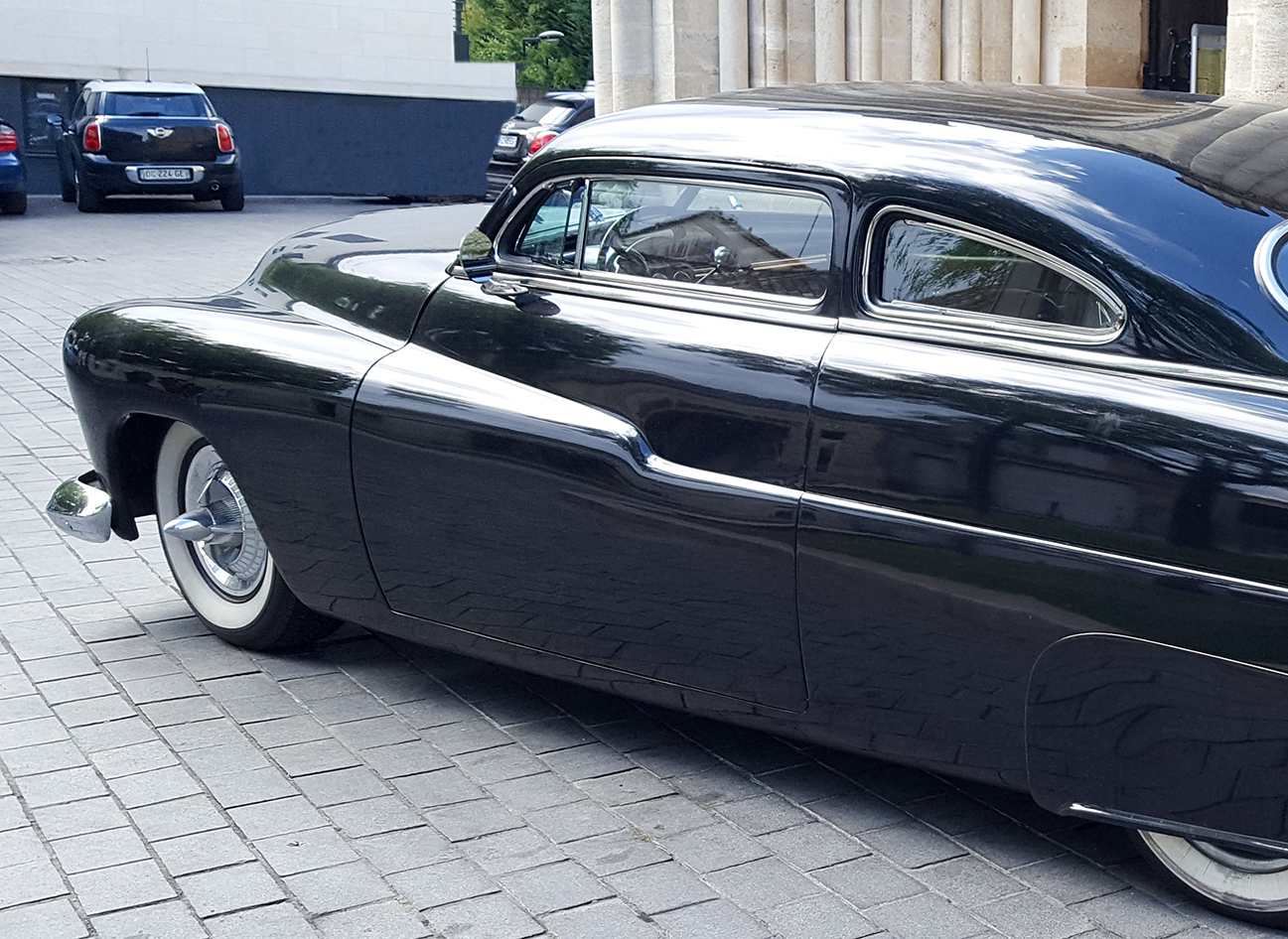
By the mid-1950s, the United States had reached a cultural pivot point. Postwar prosperity ushered in a renewed sense of confidence throughout the country, reflected in the rapid growth of its burgeoning suburban communities. But beneath the polished exterior, something else was taking hold beyond the tranquility of the “perfect American life.” The younger generation — the teenagers — began pushing the boundaries of traditional authority with their own tastes, attitudes, and defiant sense of identity. And Hollywood began to take notice.
Released on October 27, 1955, Rebel Without a Cause arrived at the precise moment when teenagers began evolving from a demographic footnote to a fully formed social class, landing like a cultural shockwave. Dramatizing the rapidly widening rift between adults and teenagers, the film offered a nuanced view of alienation and fractured family structures. It also created a star-making role for 24-year-old James Dean, whose haunting portrayal of Jim Stark in Rebel Without a Cause turned the young heartthrob into a cultural icon.
Big Screen Car Culture
Contrasting Jim Stark’s brooding, sensitive outsider yearning to belong style was his unassuming car of choice — a 1949 Mercury Series 9CM Coupe. As the coupe was originally marketed by Ford Motor Company as a comfortable, well-appointed family car for the postwar middle class, it would seem a counterintuitive decision for the young character. But director Nicholas Ray saw Dean’s presence modifying the car’s identity, transforming a machine rooted in practicality into a cinematic emblem of cool.
Driving a Generational Revolution
When Edsel Ford founded the Mercury division at Ford Motor Company in 1938, he foresaw a car brand that could serve as an affordable vehicle gateway between Ford and the more affluent Lincoln. For more than a decade, Mercury models shared Ford’s basic engineering, but the 1949 model year brought a dramatic shift.
The 1949 Mercury Series 9CM Coupe represented a leap forward for the Ford brand, one meant to compete directly with entry-luxury offerings from Buick and Oldsmobile. For the first time, Mercury abandoned Ford’s shared body architecture and adopted the platform and body structure of the smaller Lincoln.
Stylistically, the 1949 Mercury Series 9CM Coupe introduced a smoother, more aerodynamic ponton-style body design. Its rounded fenders, wide grille, subtle contour lines, and two-door coupe profile represented a departure from the angular prewar automotive design aesthetic. Suicide-style rear doors, oversized headlamps, and a broader stance gave the Mercury coupe an understated, muscular presence.
Under the hood, the 1949 Mercury carried a 255 cubic-inch flathead “BG” V8 engine paired with a Holley 885 FFC two-barrel carburetor, cranking out 110 horsepower with 200 pound-feet of torque, and was matched with a three-speed manual gearbox.
A Rebel Becomes a Legend
The symbolic power of cars in Hollywood lore is what creates a legend. What made the 1949 Mercury Series 9CM Coupe from Rebel Without a Cause an icon was its synergy with the Jim Stark character; how such an unassuming vehicle became the young protagonist’s sanctuary despite it driving him towards conflict and confrontation throughout the film’s most emotionally charged scenes. And younger audiences identified with this, finding a reflection of themselves on the screen. Following the film’s release, the Mercury 9CM became the quintessential cool ride for the American teenager.
Tragically, James Dean never saw the immediate success and cultural impact Rebel Without a Cause had on audiences, nor its indelible imprint on generations to come. The film was released posthumously nationwide just a few weeks after Dean’s fatal September 1955 car crash on a lonely stretch of highway near Cholame, CA, en route to a racing event in Salinas.
To this day, the legacies of the film, its star, and the famous car endure. The original 1949 Mercury Series 9CM Coupe used throughout the production of Rebel Without a Cause survives, acquired from Warner Brothers Studio by hotel and casino magnate William F. Harrah in 1958. Along with Harrah’s extensive classic car collection, the Mercury 9CM now resides in the National Automobile Museum in Reno, Nevada.
Not Fade Away
Seventy years later, Rebel Without a Cause endures as a defining Hollywood touchstone, celebrated for its raw portrayal of youth culture and its lasting legacy. As much as the film lifted James Dean into everlasting stardom, the on-screen presence of the 1949 Mercury Series 9CM Coupe secured its place among the most recognizable and celebrated cars in movie history.