


Few traditions embody classic Americana quite like baseball and 1960s-era pony cars. The same holds true for the wave of standout baseball films released throughout the 1980s, including indelible pop culture classics like The Natural, Eight Men Out, Major League, and Field of Dreams, each rekindling our fascination with America’s pastime on the silver screen. But one movie stood apart from the sentimental tone that defined many sports films of the era. A beloved romantic sports comedy created by a former ballplayer-turned-filmmaker who wanted to tell the real story of the Church of Baseball, the greatest show on dirt.
With the 1988 film Bull Durham, writer-director Ron Shelton was determined to tell how it was, based on his own experiences as a semi-successful minor league player for five seasons between 1967 and 1971. As an infielder for “bus league” teams like the Baltimore Orioles’ farm system and the Triple-A league with the Rochester Red Wings, Shelton wanted to show the realism of life on and off the minor league ballfields, not the mythology. Sure, Bull Durham was very funny, but he also wanted to go deeper, exposing the cockiness and big league quests of the young rookies and fading careers of aging players who spent years chasing a dream that rarely paid off.
At the film’s heart is Crash Davis, portrayed in a star-making role by Kevin Costner, a seasoned catcher for the Triple-A minor league Durham Bulls, nearing the end of the line and still clinging to the game that shaped his life. Grizzled yet wise from his years as a ballplayer, Crash is a man of wit and conviction, sharp instinct, and dogged stubbornness. So, the car Crash drove in the film needed to emulate his classic, rough-around-the-edges style.
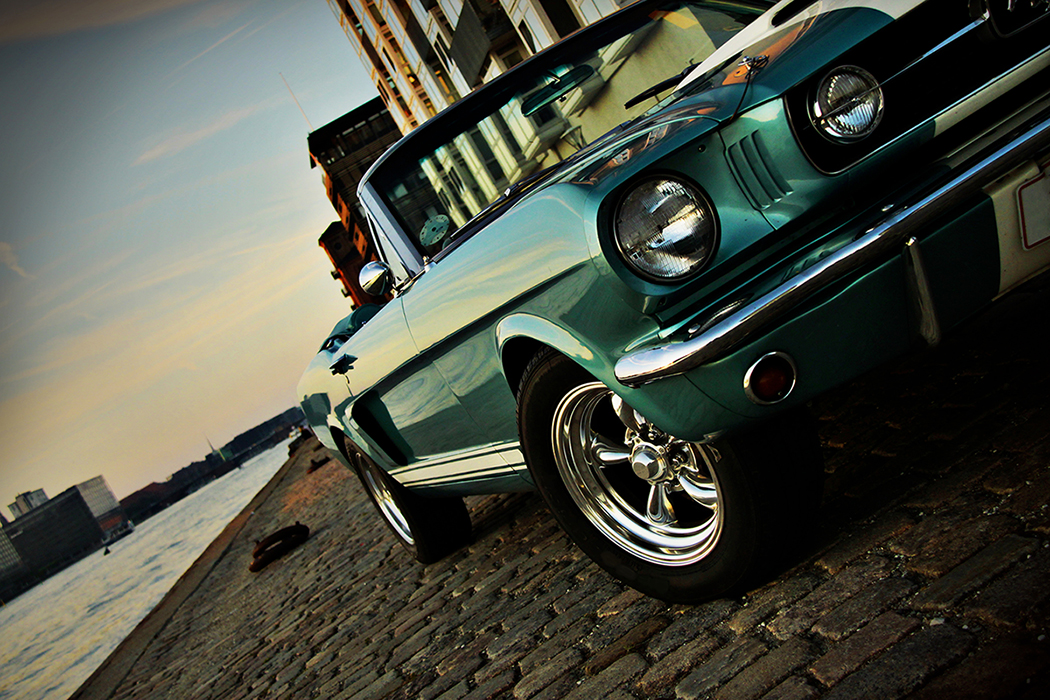
Shelton chose the 1968 Shelby Mustang Cobra GT350H Convertible, finished in faded Highland Green paint with primer patches throughout its body.
Unmistakable Shelby Mustang Pedigree
By 1968, Carroll Shelby had already cemented his reputation as one of America’s most influential automotive visionaries. His partnership with Ford transformed the Mustang from a stylish pony car into a legitimate high-performance machine capable of competing with the American muscle cars that were tearing up the streets of Anytown, U.S.A. every Friday and Saturday night.
Between 1965 and 1967, the Shelby Mustang was built exclusively by Shelby American. But by 1968, Ford Motor Company had taken over the GT line entirely, moving production from California to its Dearborn, MI, facilities. That same year, Ford introduced the first Shelby Mustang Cobra GT350 Convertible, expanding its lineup beyond the hardtop fastbacks that defined the era.
The GT350 featured distinctive Shelby styling cues, including fiberglass body panels, a louvered hood, an integrated roll bar, and functional hood scoops. Though performance remained central to the Shelby identity, the 1968 models also leaned further into comfort and drivability. Premium appointments like air conditioning, tilt steering, and tinted windows reflected the growing demand for pony and muscle cars that could lead double lives as daily commuters and weekend street warriors.
The GT350 housed a J-Code 302-cubic-inch Windsor V8 engine beneath the hood that produced 250 horsepower and 310 pound-feet of torque (wicked performance at the time), equipped with a Holley four-barrel carburetor and paired to either a four-speed manual or a three-speed “Cruise-O-Matic” automatic transmission.
“Rent-A-Racer” Immortality
What made the Bull Durham Shelby Mustang a rarity was its GT350H designation. The “H” identified the car as part of Hertz’s (unofficially nicknamed) “Rent-A-Racer” program for a unique partnership between Shelby American and the Hertz rental company between 1965 and 1968. Devised to promote the rental giant’s brand, the program gave the average driver rental access to Hertz’s limited number of high-powered Shelby Mustangs without the expense of owning one. Predictably, these GT350H models took a lot of weekend racing wear and the “Rent-A-Racer” program, though generating enormous publicity for Hertz, proved too costly to sustain.
The Bull Durham Shelby Mustang was one of only 224 GT350H convertibles built for Hertz in 1968, making it exceptionally rare, even among collector-grade Shelby Mustangs. While most Hertz Shelbys were finished in Raven Black with gold striping (the Hertz corporate colors), the film’s production car was originally painted in Highland Green, adding to its rare distinction.
Appealing most to Shelton, Costner, and Bull Durham producer Thom Mount was the roughened appearance of the GT350H, an attribute that enhanced its mystique. Looking a bit disheveled and neglected with its discolored and primered facade, all three agreed they’d found the car that fit Crash Davis’s world-weary journeyman persona like a (batting) glove.
Following Your Heart
So fond was Costner of the 1968 Shelby Mustang Cobra GT350H Convertible he drove throughout the filming of Bull Durham, he approached Mount toward the end of principal photography with an offer to buy it. The $21,000 asking price, which included the $14,000 the production initially paid for the car, $3,000 in repairs throughout the 56-day shoot, and, of course, a $4,000 profit markup, was non-negotiable. Costner initially refused, but soon after wrote Mount a check for the full asking price and had the car fully restored to its original 1968 specifications, complete with the GT350H designation.
Driving a Major League Legend
Prized by collectors and automotive historians alike, the 1968 Shelby Mustang Cobra GT350, the “H” model particularly, is a highly coveted pony car legend. Today, the Bull Durham Shelby Mustang Cobra GT350H Convertible remains a part of Costner’s personal car collection. Not only does it represent a turning point in his indelible acting and directing career, even appearing prominently on the Bull Durham movie poster, the car endures as part of Hollywood history, carrying on the spirit of one of the most beloved sports films of all time.