


Innovation takes many forms as automakers transition from the 2026 to the 2027 model year. In particular, the vehicle electrification space is in a unique state of flux, with product offerings developing to meet consumer demand and improve the ownership experience. From maturing charging solutions to expanded hybrid options, new EV models and innovative powertrain developments, the trends in vehicle electrification point to exciting opportunities for buyers and dealerships alike, with options for electrified driving as varied as the buyers considering them.
Maturing Technology: Native NACS Charge Ports
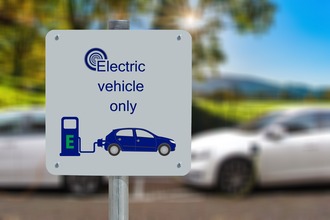
Public charging stations are only useful if you are able to connect your vehicle to them, and a solution to this challenge is reaching maturity in the new 2027 models being built now, after initial commitments and years of ongoing effort among all the mainstream automakers.
In late 2022, Tesla opened access to their North American Charging System (NACS) connector for use by other manufacturers, citing their “mission to accelerate the world’s transition to sustainable energy” as the goal. Adoption by automakers meant expanded access to the established Tesla Supercharger network, and approval of this charger type in 2023 by the Federal Highway Administration meant federally funded charging infrastructure could now include it. This slim combination of both AC and DC fast-charging pins was established as recommended practice by the Society of Automotive Engineers in 2024 under the label SAE J3400.
In subsequent years, optional OEM-approved NACS adapters provided access to the Tesla Supercharger network, and manufacturers began working toward incorporating this charge port style into their vehicles. The 2027 model year is notable for the number of native NACS ports that are newly incorporated as native equipment in EVs, including every EV in the General Motors product portfolio, the Dodge Charger Daytona Scat Pack, Volvo EX60, and Toyota RAV4 Plug-in Hybrid.
Expanding Familiar Options: New Hybrid Models
Traditional hybrid powertrains retain strong appeal to U.S. consumers, as illustrated in the 2026 Global Automotive Consumer Study from Deloitte. Among U.S. respondents to the survey, 21 percent said they were shopping for a vehicle with a hybrid powertrain, compared to 61 percent with an internal combustion engine and 7 percent with an all-electric powertrain. While 2026 vehicles designed with these buyers in mind already exist across the marketplace, manufacturers continue to add hybrid powertrains to their model lineups for the upcoming model year to deliver higher fuel economy ratings under familiar nameplates.
Among the models of note, the Kia Telluride Hybrid, Palisade Hybrid, and Subaru Forester Wilderness Hybrid trim are all receiving a new traditional hybrid powertrain for the 2027 model year, blending both gas and battery-electric energy to power the vehicle. The 2027 Nissan Rogue Hybrid e-POWER is a series hybrid, meaning the vehicle is driven by electric motors which are powered by electricity derived from a generator connected to a gas engine.
Fine-Tuning EVs: New 2027 Models
For buyers who value the zero tailpipe emissions performance of a battery electric vehicle, the 2027 model year offers several fresh options for consideration. Across the trendline, the commonality is size. New models like the Kia EV3, Volvo EX60, and Eclipse Sportback EV, along with the returning Chevy Bolt, serve as approachable gateways to all-electric performance with moderate sizing that supports greater battery efficiency. Meanwhile, luxury automakers like Audi and Mercedes-Benz are prioritizing two-row SUV and coupe or sportback body styles for their new electric models for 2027.
Notable 2027 electric two-row SUVs and car models include:
- 2027 Kia EV3
- 2027 Mitsubishi Eclipse Sportback EV
- 2027 Chevy Bolt
- 2027 Volvo EX60
- 2027 Mercedes-Benz GLC Electric SUV and GT Electric 4-Door Coupe
- 2027 Audi A6 Sportback e-tron®, S6 Sportback e-tron, Q6 e-tron, Q6 Sportback e-tron, SQ6 e-tron, SQ6 Sportback e-tron
Developing Powertrains: Extended-Range EVs
Among U.S. consumers in the 2026 Global Automotive Consumer Study, the top concern surrounding buying an EV is the driving range, with 47 percent of respondents listing it. An answer to these concerns may be the evolution of extended-range EVs.
Melding the powers of gas and electric energy in ways that traditional hybrids don’t, extended-range EVs stand as a unique answer for drivers who want the performance characteristics of an EV and the flexibility and peace of mind that a hybrid can provide. Extended-range EVs use electric motors powered by a propulsion battery to drive the wheels, along with a gas motor that is used to generate power to recharge the propulsion battery. Plug-in charging capabilities offer fast-charging capabilities as well.
Several manufacturers have moved toward extended-range EVs as a powertrain solution for their larger full-size pickups and SUVs, including several that are set to become available soon. Examples of these upcoming models include the Ram 1500 REV, which Car & Driver reports will begin production early next year, and the Jeep Grand Wagoneer REEV, which was announced for the 2026 model year, but Automotive News reports will begin production in November 2026, and the Hyundai Santa Fe EREV announced as a future product for the U.S. market during the brand’s 2026 CEO Investor Day. As a future model, Ford says it’s developing an extended-range EV version of the F-150 Lightning®.
Reaching Buyers: Dealership Solutions for Consumer EV Research
Among U.S. consumers, three primary sources dominate vehicle research behavior. According to responses in the 2026 Global Automotive Consumer Study, the top three sources consumers use as they consider their next vehicle are physical dealership visits, the manufacturer website, and the dealership website. Developing consistent messaging between your website and OEM sources is what Aronson Advertising can bring to your dealership, unifying supporting sources to align with your consumers’ ultimate research source — the vehicles in your showroom, explained by your sales team.
We offer a comprehensive services menu, ranging from SEO and SEO-optimized content to SEM, webmaster services, and more to help ensure your website visitors find all the information they need throughout their research journey. Learn more about our available offerings, then get in touch with our team online or by calling (847) 297-1700.